How to Get a Certification in Personal Training: 2026 Guide
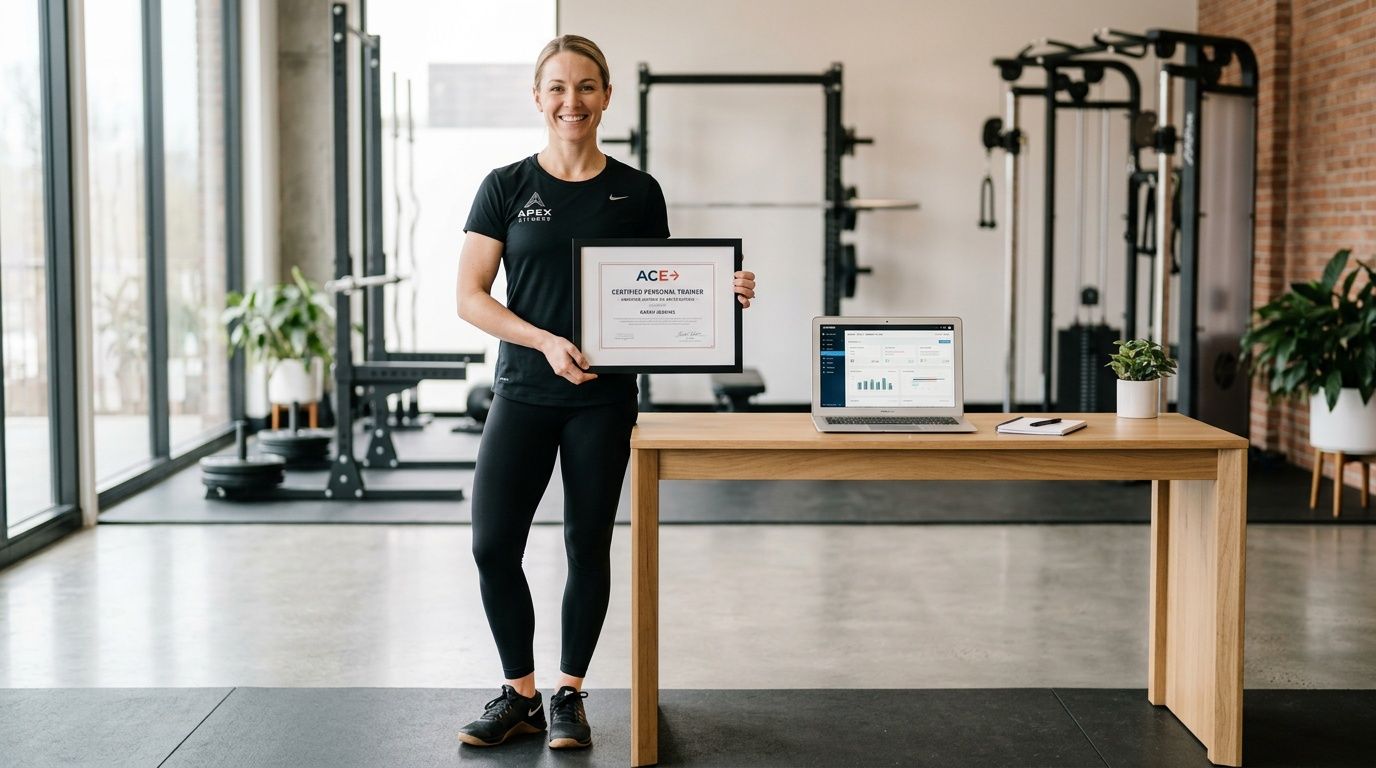
You've probably hit this point already. You can coach. You know how to write a program, manage regressions, cue a hinge, and keep a client moving when motivation drops. But now you need the credential because better clients ask for it, insurers care about it, and your business starts to look more serious when the certification is real and recognized.
That's the part most articles miss. How to get a certification in personal training isn't just an exam question. It's a business decision. If you choose the wrong cert, underestimate the prerequisites, or treat the test like the finish line, you can waste months and still end up with the same client roster problems you had before.
Table of Contents
Your Next Step Is More Than a Certificate
Choose a Certification That Aligns With Your Business
Start with the business model, not the provider
What actually matters when comparing certs
A simple decision framework
Budgeting and Prerequisites for Your Certification
Know what has to be done before exam day
Build a real budget, not a wishful one
Designing a Realistic Study Plan and Passing the Exam
Match your prep to the actual exam
Sample Exam Comparison 2026
A study week that works around clients
What usually fails working coaches
Getting Your Insurance and Liability Coverage in Place
Insurance is part of the job, not admin busywork
What to put in place before taking paid clients
Your 90-Day Plan to Monetize Your New Credential
Days 1 to 30 clean up your market position
Days 31 to 60 turn attention into consultations
Days 61 to 90 build the delivery system
Your Next Step Is More Than a Certificate
If you're looking at certification now, you're probably not trying to “become interested in fitness.” You're trying to make your coaching business more credible, more defensible, and easier to grow.
That instinct is right. But the hard truth is that the credential alone won't protect your career. Industry analysis reports that about 80% of personal trainers do not make it past the two-year mark, and U.S. labor data still projects 14% job growth for fitness trainers and instructors from 2022 to 2032 according to this breakdown of trainer success and job growth. There's opportunity, but there's also real attrition.
Practical rule: Get certified to open doors. Stay in business by building systems that keep clients, collect payments, and reduce churn.
That changes how you should approach the process. The right certification is the one that helps you get insured, get trusted, and get hired or referred in the lane you want to coach in. If you train parents from a garage gym, run semi-private sessions, or want more home personal training clients, your decision should reflect that reality.
A lot of coaches make the mistake of treating the exam as the project. It isn't. The exam is one milestone inside a larger shift from “good coach” to “professional operator.”
Choose a Certification That Aligns With Your Business
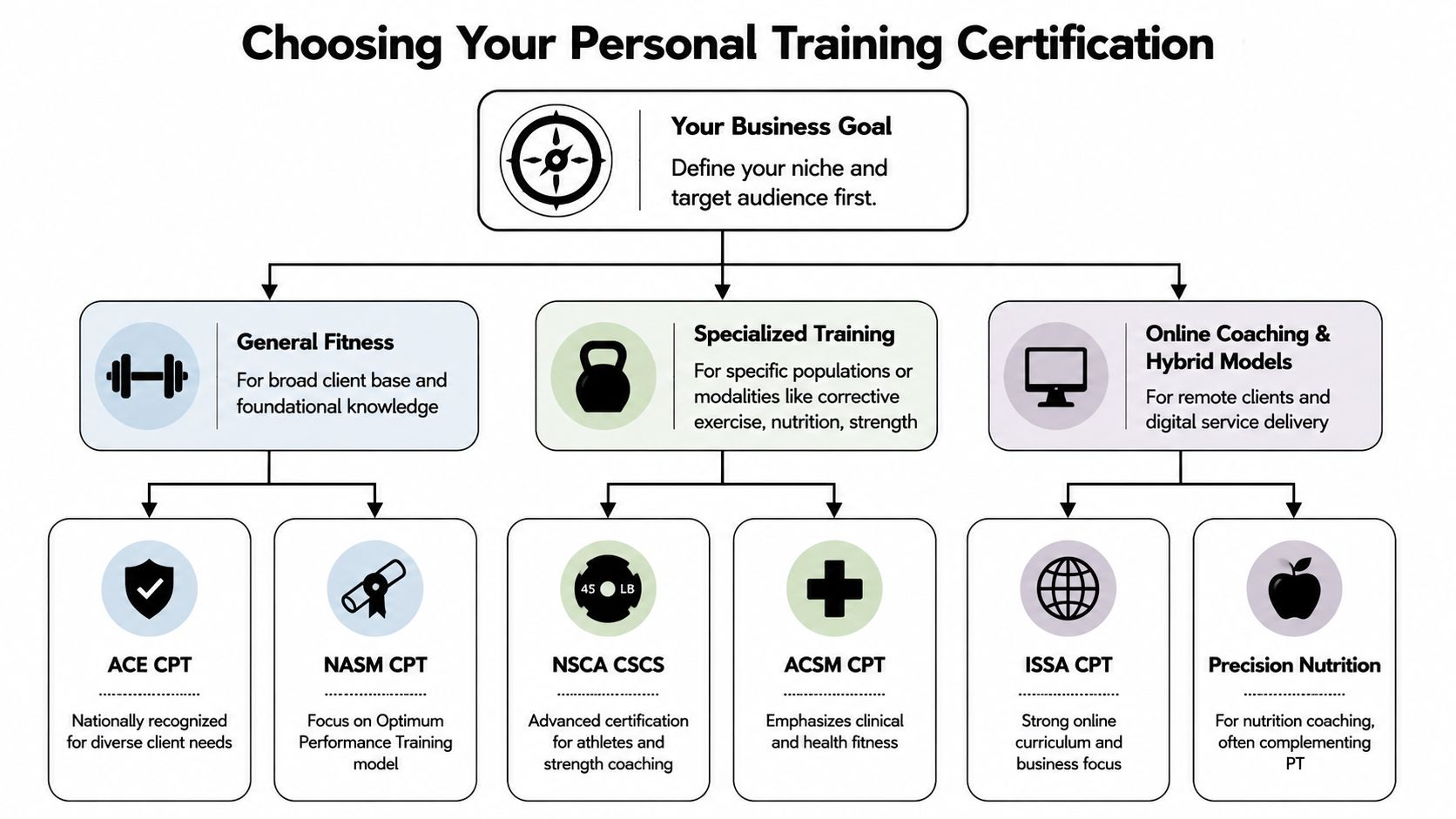
The market is crowded. The number of certified fitness professionals grew from 596,000 in 2016 to 740,000 today, and many trainers choose recognized certifications such as NASM, ACE, ISSA, ACSM, or NSCA for credibility and hiring prospects, based on industry reporting on personal trainer market growth. In other words, certification matters, but just having one doesn't separate you by itself.
Start with the business model, not the provider
Most coaches ask, “Which cert is best?” The better question is, “Which cert makes sense for the clients I want and the work I do?”
Use this filter:
General population coaching If your revenue comes from busy adults, weight loss clients, beginners, and lifestyle coaching, a broad, recognized CPT makes the most sense. You want something employers, insurers, and prospects recognize quickly.
Performance or athlete-focused work If you coach strength athletes, field sport athletes, or advanced lifters, your credential should support that position. General certs can still work, but they won't market you the same way.
Clinical or special population work If you work near the rehab and health-fitness line, you need a certification path that signals caution, structure, and professionalism.
Online or hybrid delivery If most of your future business is remote, curriculum style matters. Some coaches also pair their CPT with a nutrition credential to support habit coaching and compliance, especially if their service includes check-ins and behavior support like the coaches featured in these examples of top nutrition coaches.
What actually matters when comparing certs
A lot of comparison posts focus on branding. Coaches need something more useful.
Here's what to check before you enroll:
Accreditation For most serious business use, recognized accreditation is the floor. If a cert makes it harder to get insured or explain yourself to prospects, it's a poor shortcut.
Client fit Does the education match the population you coach now, or the one you want to coach next year?
Employer and referral recognition If you want gym access, studio contracting, or allied referrals, the name on the cert matters.
Exam format Some exams are shorter and tighter. Others demand more time and different pacing. That affects how you should study.
Next-step ecosystem If you know you'll add corrective exercise, nutrition, strength coaching, or special population work later, choose a provider that makes progression clean.
Don't choose a certification because other trainers on social media keep naming it. Choose it because it supports your client type, insurance path, and sales story.
A simple decision framework
If you're stuck between recognized options, this usually works:
Your situation | Better choice pattern |
|---|---|
You want broad credibility fast | Choose a well-known accredited general CPT |
You want athlete-facing positioning | Choose a path that aligns with strength and conditioning |
You want medical or health-fitness credibility | Choose a provider associated with clinical fitness |
You mainly sell online coaching | Choose a cert you can explain simply and pair with strong business systems |
The wrong move is choosing based only on study convenience. Easy to start doesn't always mean useful to sell.
Budgeting and Prerequisites for Your Certification
The fastest way to drag certification out is to budget only for the headline price. That's how coaches end up delaying the exam, rushing CPR, or paying for retakes they could've avoided with better planning.

Most major certification bodies, including NASM and NSCA, list current CPR/AED certification as a mandatory eligibility requirement to sit for the exam, alongside being at least 18 and having a high school diploma or GED, according to NSCA CPT eligibility requirements. That requirement catches people because they assume they can “do CPR later.” Usually, you can't.
Know what has to be done before exam day
Before you spend money on any course, confirm these items:
Age and education eligibility Make sure you meet the minimum entry requirements now, not later.
CPR/AED timing Check whether your provider requires proof before you book the exam. Many do.
Exam delivery rules Proctored conditions, remote testing setup, ID requirements, and scheduling windows all matter when you're juggling clients.
Retake policy If your prep plan is tight, the retake terms should matter to you before purchase, not after a miss.
Coaches lose momentum when logistics stay fuzzy. Clear the admin first, then study.
Build a real budget, not a wishful one
Your actual certification budget usually includes more than the exam itself.
Use this checklist:
Course package or exam-only option Some coaches need the full learning package. Others already have a strong base and mainly need exam prep.
Study materials Textbooks, digital modules, practice tests, and prep aids may be bundled, or they may not.
CPR/AED certification This is not optional if your target exam requires it.
Retake exposure Even if you expect to pass, budget as if your schedule might force one bad testing day.
Time cost If a longer path delays you from onboarding paying clients, that cost is real even if it doesn't show up on a receipt.
This short walkthrough is useful if you want to think through the process from a coach's perspective before booking:
Some coaches benefit from a longer diploma-style path. Others just need a recognized cert, a clean study plan, and a faster route back into selling sessions. Don't confuse more schooling with more traction. For a solo operator, time away from revenue matters.
Designing a Realistic Study Plan and Passing the Exam
A working coach can't study like an undergrad. You have sessions before work, cancellations in the middle of the day, and admin at night. If you try to “study when there's time,” you'll drag this out and retain very little.
The study plan has to fit the exam you're taking. Certification providers vary. The NASM CPT exam is a 120-question, 2-hour test requiring a 70% score, and NASM reports an 85% pass rate in 2025. The ACE CPT exam is a 150-question, 3-hour test requiring a scaled score of 500, based on NASM exam details and pass-rate reporting and the provider comparison in the verified brief.
Match your prep to the actual exam
Different exams punish different mistakes.
If the test is shorter and tighter, pacing pressure rises. If it runs longer, concentration and decision quality become a bigger issue. If the provider uses scaled scoring, don't assume your usual “percentage target” thinking will map cleanly.
Here's a simple comparison.
Sample Exam Comparison 2026
Metric | Example Cert A (NASM) | Example Cert B (ACE) |
|---|---|---|
Question count | 120 | 150 |
Time limit | 2 hours | 3 hours |
Passing standard | 70% | Scaled score of 500 |
Delivery style | Proctored, closed-book | Proctored CPT exam, in person or live remote |
If your prep method ignores those differences, you're not really preparing for the exam. You're just reviewing content.
A study week that works around clients
Most coaches do better with short, fixed blocks than marathon sessions. Treat exam prep like programming. Put it on the calendar, build progression, and test weak points early.
A practical weekly structure looks like this:
Two focused content sessions Use these for high-yield review. Anatomy, movement assessment, program design logic, and safety topics usually deserve repeat exposure.
Two active recall sessions Close the book. Write out concepts, quiz yourself, explain systems out loud, and force retrieval.
One timed practice block In this section you learn pacing. Don't skip it.
One error-review block Review only what you missed and why you missed it. Knowledge gap, wording issue, or bad pacing.
One light reset session Use flashcards, concept maps, or brief review. Keep it low stress.
Your best study tool is usually the practice exam review sheet you build yourself after each timed block.
If you're already coaching online or hybrid, keep the same discipline you expect from clients. Schedule study blocks around your highest-energy windows. For a lot of coaches, that means late morning between sessions or one fixed evening slot, not “whenever I'm free.”
A dedicated coaching platform can also help reduce the usual admin spillover that eats study time. If your current setup involves spreadsheets, chat apps, manual reminders, and payment chasing, you'll protect more prep time with a cleaner system. Tools like personal trainer apps built for scheduling, programming, and client management matter here because exam prep usually fails in the margins, not in the textbook.
What usually fails working coaches
Three patterns show up constantly:
Passive reading Coaches reread chapters and highlight everything. That feels productive and doesn't hold up under test pressure.
Generic prep They use random CPT advice from the internet instead of studying for their exact provider and format.
No pacing practice They know the material well enough, but they haven't practiced answering under time pressure.
A better approach is boring and effective. Study the blueprint. Practice retrieval. Simulate the test. Review misses. Repeat.
Getting Your Insurance and Liability Coverage in Place
Passing the exam feels like the finish line for about a day. Then real business kicks in. If you're training independently, insurance belongs on the same priority level as certification, intake forms, and payment setup.
Insurance is part of the job, not admin busywork
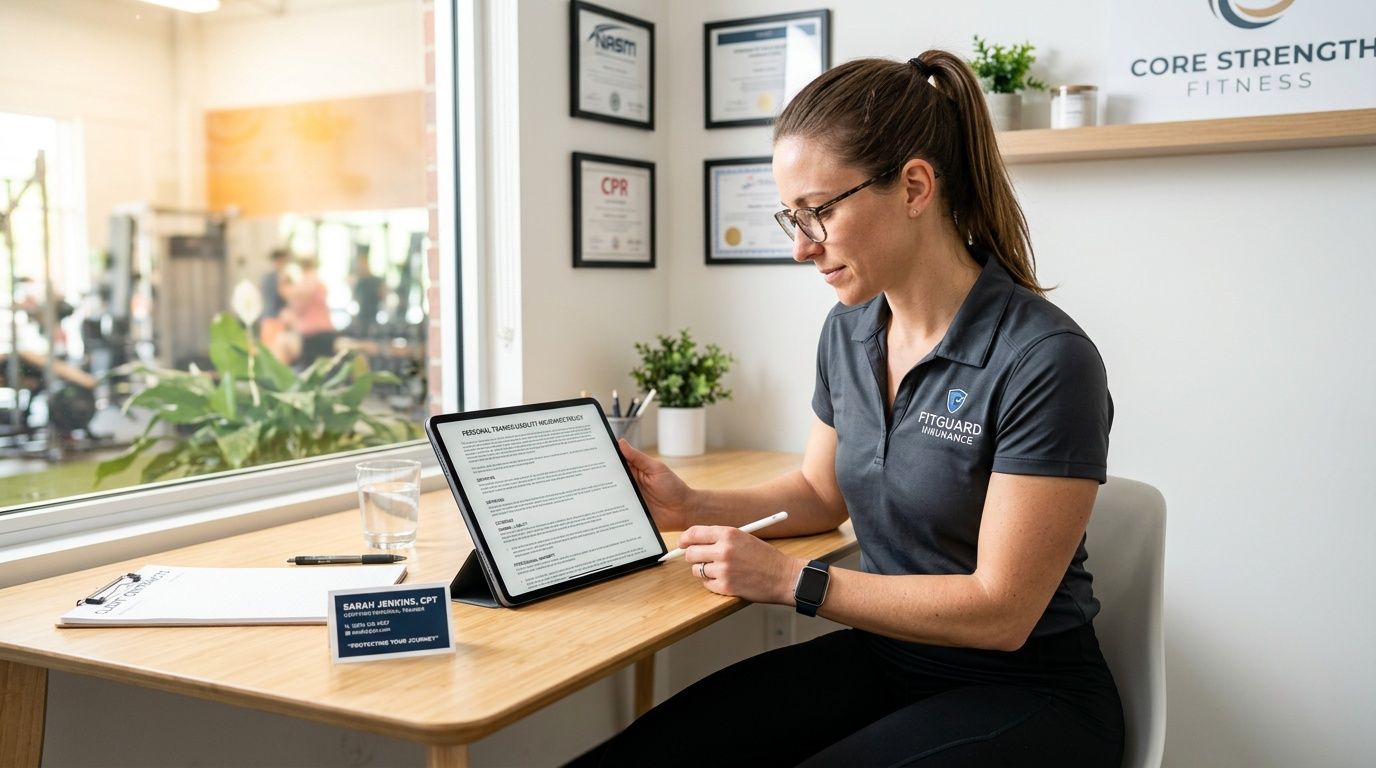
A lot of coaches delay this because it doesn't feel like coaching. That's a mistake. The minute money changes hands, your work becomes professional service delivery with real liability attached.
At a minimum, understand the difference between these two buckets:
General liability This covers incidents tied to the training environment, such as a client getting hurt because of a condition in the space.
Professional liability This covers claims tied to your coaching decisions, instruction, programming, and professional conduct.
Those aren't interchangeable. If you coach in person, online, or hybrid, think through where your exposure sits. The details of your setup matter.
What to put in place before taking paid clients
Use a short action list:
Confirm your certification status Insurers often care about recognized credentials and current standing.
Describe your service In-person, remote, hybrid, semi-private, home visits, and specialty populations can affect coverage needs.
Check contracts and waivers Good documents don't replace insurance, but they support a cleaner operation.
Review local business requirements Depending on your market, you may need business registration, additional documentation, or venue-specific coverage.
Clients rarely ask about insurance until something goes wrong. You should care long before that.
If you need a broader checklist around what solo coaches must have in place before working independently, this guide to personal trainer requirements is a useful operational reference. It helps connect the credential to the rest of the business setup, which is where many newly certified coaches get sloppy.
Your 90-Day Plan to Monetize Your New Credential
A new certification only pays you if the market sees it, understands it, and gets a simple path to buy from you. Coaches get stuck because they update their bio, post one announcement, and assume leads will come in. Usually they don't.
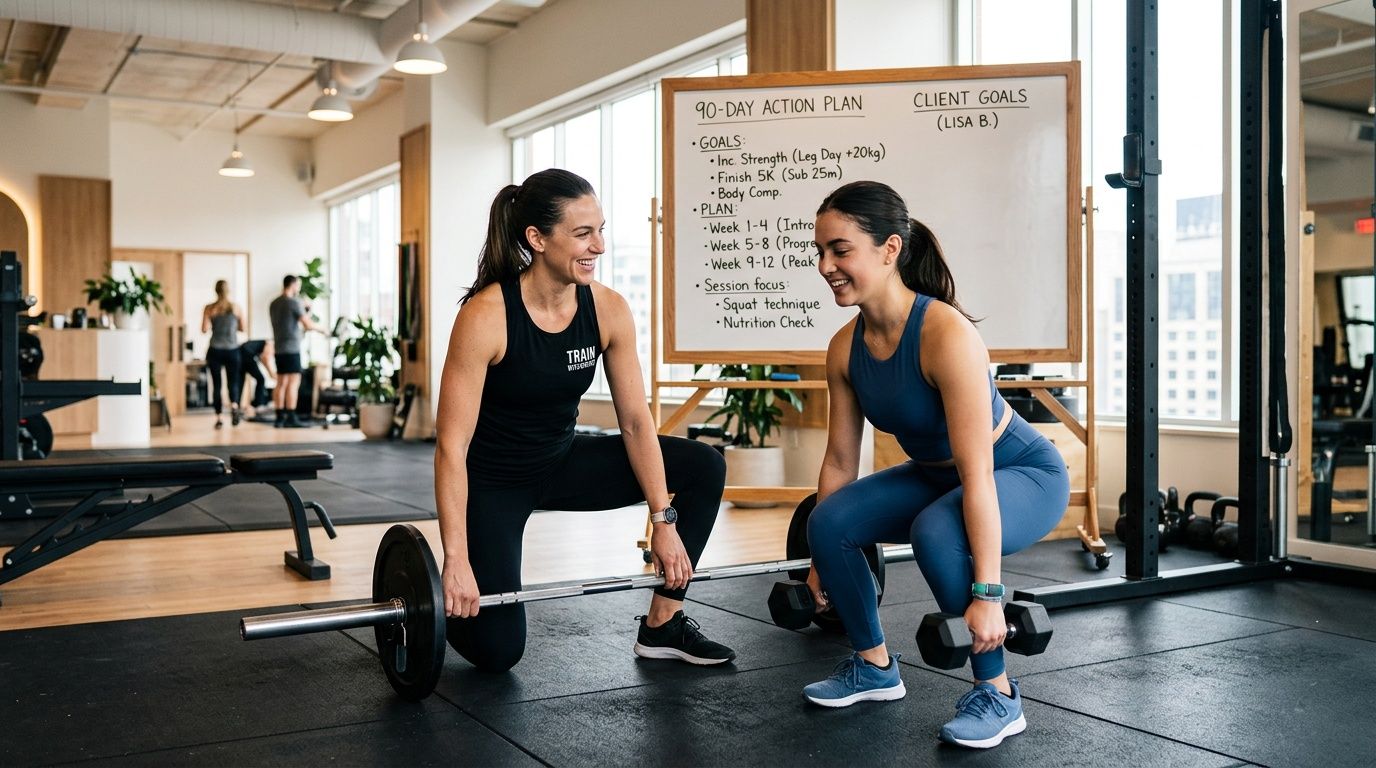
Days 1 to 30 clean up your market position
Your first month is about clarity.
Do these first:
Update your positioning Your Instagram bio, website headline, email signature, and consult script should reflect the new credential without sounding inflated.
Refresh your offer stack Define what you sell now. One-to-one sessions, hybrid coaching, movement assessments, small-group work, or habit-focused coaching.
Tighten your referral language Past clients, current clients, and local partners should know exactly who you help and what result you're known for.
Announce with context Don't just post the certificate graphic. Explain what the credential sharpens in your coaching and who it helps.
A good announcement sounds like a professional update, not a graduation post.
“Certified” doesn't sell by itself. A clear problem, clear client type, and clear offer sell.
Days 31 to 60 turn attention into consultations
The second month is where you convert the credential into actual conversations.
Focus on direct actions:
Reach back out to warm leads Anyone who said “maybe later” is now easier to re-approach.
Create one short authority asset That could be a movement screen checklist, a beginner strength guide, or a fat-loss onboarding framework. Keep it simple and useful.
Ask for introductions Not vague referrals. Specific introductions to the kind of client you want more of.
Clean up your consult flow Every inquiry should move through the same process: intake, consult, recommendation, payment, onboarding.
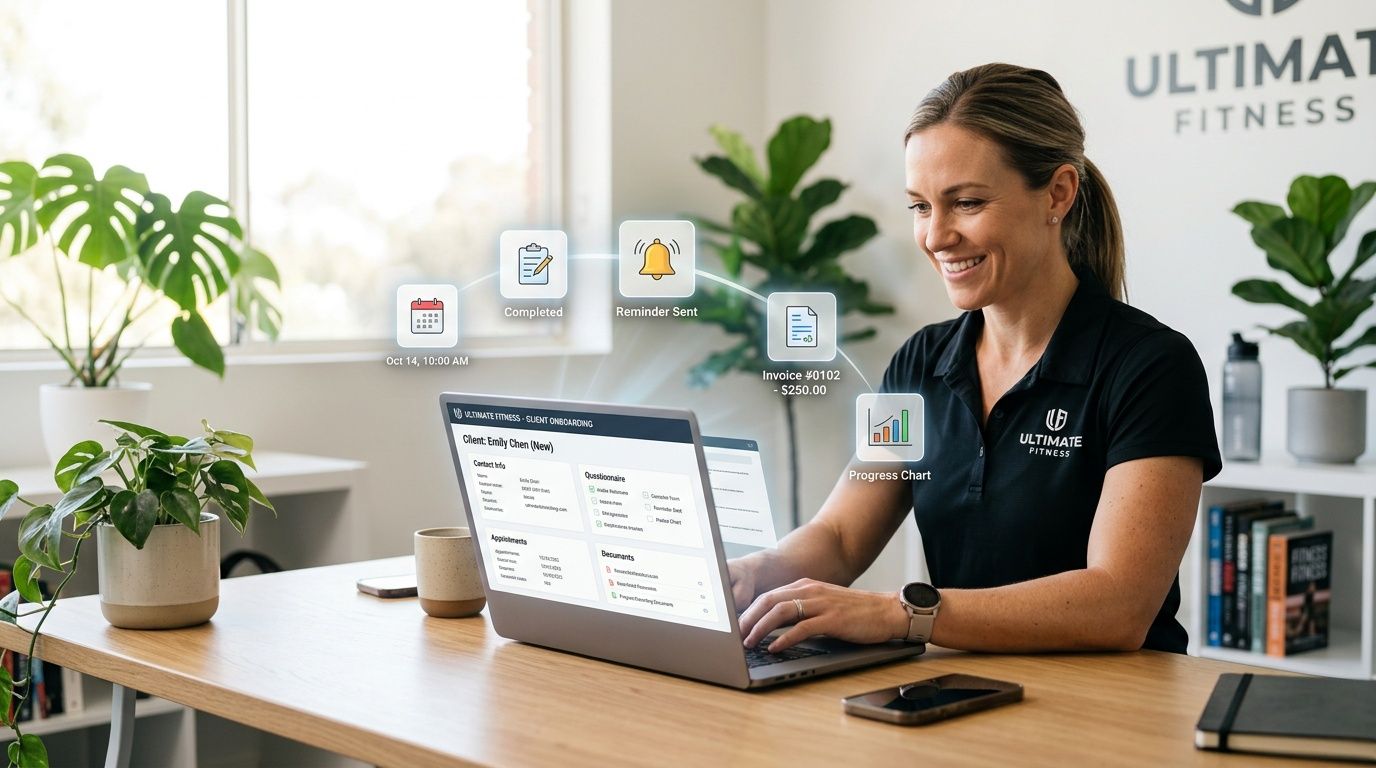
If that process still lives across forms, notes apps, DMs, and invoices, fix that before volume increases. This is one place where FitCentral fits naturally. It gives coaches one place for intake, programming, scheduling, progress tracking, messaging, and payments, which matters when your new credential starts generating more interest. Its co-founder, David Spitdowski, is also a practicing trainer, so the workflows are built around how coaches operate.
Days 61 to 90 build the delivery system
The third month is where you protect retention. This is the difference between a coach who gets a brief spike of interest and one who builds stable monthly revenue.
Use this checklist:
Standardize onboarding Every new client should get the same polished first week experience.
Build your first 4-week templates Not cookie-cutter coaching, but repeatable foundations you can customize quickly.
Set expectations early Communication frequency, missed session policy, progress review cadence, and training responsibilities should all be clear.
Track wins visibly Clients stay longer when progress is visible and discussed, not assumed.
Create a referral moment Ask after a visible win, not randomly.
You can also use this window to improve offline marketing. A simple, clear handout or leave-behind still works if you train locally. These fitness trainer business card ideas are useful if your referrals still happen in gyms, studios, rehab clinics, or community spaces.
The point of the first 90 days isn't to become a different coach. It's to make your coaching easier to trust, easier to buy, and easier to stay with.
If you've got the coaching skill and you're serious about turning certification into a steadier business, FitCentral gives you a cleaner way to run the client side of that growth, from intake and programming to scheduling, check-ins, and payments, without stitching together tools that create more admin than they solve.
See also


Ready to stop fighting your software?
FitCentral gives you everything you need to manage clients, deliver results, and grow your business. Sign up today.